The Science Behind Strong and Beautiful Veneers
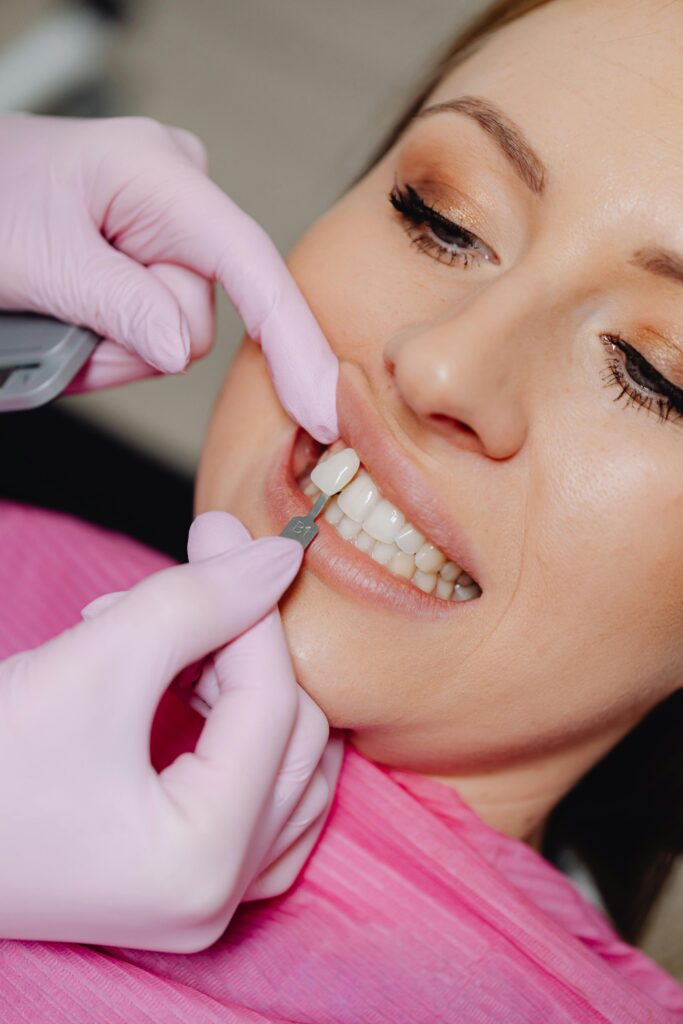
Veneers sit at an unusual intersection of art, biology, and materials science. Patients often see the final result, a brighter smile, a corrected edge, a more even shape, but the real story is what happens before the mirror moment. A veneer succeeds because several systems work together: enamel chemistry, ceramic engineering, adhesive dentistry, bite mechanics, color science, and careful clinical judgment. When any one of those pieces is ignored, even a beautiful case can become fragile, bulky, opaque, or short-lived.
That is why excellent veneers rarely come from a rushed process. The strongest and most natural-looking results are usually the product of restraint. The dentist removes as little healthy tooth structure as possible, the laboratory works within the optical limits of the chosen ceramic, and the bonding protocol is treated almost like a sterile procedure. The patient, for their part, needs to understand that veneers are not decorative caps. They are thin restorations that rely heavily on the underlying tooth for support and on a micromechanical bond for survival.
Why enamel changes everything
If there is one principle that separates predictable veneer work from compromised work, it is respect for enamel. Bonding to enamel is far more reliable than bonding to dentin. Enamel is highly mineralized, relatively dry compared with deeper tooth structure, and responds well to acid etching. When a veneer is bonded primarily to enamel, the adhesive interface is more stable over time, marginal staining is less likely, and fracture resistance tends to be better.
This matters clinically in ways patients can feel and see. A veneer placed with minimal preparation often blends more naturally at the edges because the restoration can feather into the existing tooth instead of ending in a thick ledge. It also tends to preserve tooth vitality. Once preparation extends deeply into dentin, the case becomes less forgiving. Sensitivity may increase, bonding becomes more technique-sensitive, and the long-term behavior of the veneer depends more heavily on flawless moisture control and adhesive handling.
Many of the best veneer cases are conservative cases. That does not mean no-prep veneers are always the answer. They can be excellent in selected situations, such as small teeth, lingually positioned teeth, or cases where adding volume improves the smile. They can also look overcontoured and artificial when used to force a result that really needs orthodontic movement or more thoughtful reshaping. Good dentistry is not about preserving enamel at any cost. It is about preserving the right amount of tooth while still creating proper form, alignment, and emergence profile.
The materials are thin, but the engineering is not simple
Most people think of veneers as porcelain shells, and that description is not wrong, but it is incomplete. Modern veneers are typically made from carefully engineered dental ceramics, each with different strengths, translucencies, and bonding behavior. The material must tolerate chewing forces, mimic natural enamel, and remain color stable in a wet, chemically active environment.
Feldspathic porcelain has long been admired for its beauty. Skilled ceramists can layer it with subtle translucency, internal character, and edge effects that closely resemble natural teeth. It is particularly useful when the case demands high esthetics and the preparation is conservative. Its strength is lower than some newer ceramics, so the design and bonding become even more important.
Lithium disilicate has become a popular choice because it offers a strong balance between esthetics and durability. It is significantly stronger than traditional feldspathic porcelain and can be milled or pressed into restorations with relatively thin dimensions. In everyday practice, this versatility matters. A patient who wants improved color and shape but still needs a restoration that can tolerate normal function often benefits from lithium disilicate, especially when occlusion is well managed.
Zirconia is famous for strength, but it is not the default veneer material. In very thin anterior restorations, the optical demands are high. Veneers need to transmit and reflect light in a way that resembles enamel and dentin, not just resist fracture. Earlier generations of zirconia were too opaque for the most demanding cosmetic cases. Newer translucent zirconias have improved, but the choice still depends on the clinical problem being solved. A strong material that blocks light too much can leave a smile looking flat, chalky, or lifeless.
The science here is not simply which ceramic is strongest in a laboratory. It is which ceramic performs best at a given thickness, with a specific preparation design, over a particular tooth shade, under a certain type of bite.
How veneers stay on teeth
The bond between a veneer and a tooth is one of the great achievements of modern adhesive dentistry. When done well, it is remarkably durable. When done poorly, it can fail for reasons that are often invisible to the patient until a margin stains, a veneer debonds, or a crack appears.
The process starts with etching. On the tooth side, phosphoric acid roughens the enamel microscopically and creates a surface that resin can penetrate. On the ceramic side, hydrofluoric acid is often used for etchable glass ceramics such as feldspathic porcelain and lithium disilicate. This creates microscopic irregularities in the ceramic. A silane coupling agent is then applied to improve chemical bonding between the ceramic and the resin cement.
That brief summary hides a great deal of technique sensitivity. Timing matters. Cleanliness matters. Isolation matters. Saliva contamination at the wrong moment can interfere with bond quality. In a straightforward single-tooth restoration, rubber dam isolation can make a major difference. In a multi-unit anterior veneer case, meticulous retraction, moisture control, and sequencing are essential. These are not glamorous details, but they often determine whether a case still looks clean at the margins years later.
Resin cement also does more than hold the veneer in place. It influences final color. A very thin veneer may transmit the shade of the underlying tooth and the shade of the cement beneath it. This is one reason experienced clinicians often use try-in pastes before final bonding. A veneer that looked perfect on the model can shift slightly warmer, cooler, brighter, or grayer once seated over the real tooth. Those are small changes, but in the front teeth, small changes are the whole game.
Strength is not just about the ceramic
Patients often ask whether veneers are strong. The honest answer is yes, when they are designed and used within their limits. The strength of a veneer is not just a property of the ceramic itself. It is the result of a bonded complex: tooth, adhesive, cement, and ceramic acting together.
A thin sheet of ceramic by itself can be fragile. Bond that same ceramic intimately to enamel with a well-executed resin protocol, and it behaves very differently. The tooth supports the ceramic, the adhesive layer distributes stress, and the restoration gains resistance to flex and fracture. This is why bonded veneers can perform so well despite their delicate appearance.
At the same time, veneers are not invincible. They do not enjoy repeated edge-to-edge abuse, nighttime grinding, or a habit of opening packages with the front teeth. I have seen veneers last beautifully for well over a decade in patients with stable bites and careful habits. I have also seen gorgeous restorations chip early in patients https://cashqxbm356.brightsora.com/posts/how-veneers-can-refresh-an-aging-smile who clenched heavily, had untreated wear patterns, or expected veneers to correct a functional problem that had never been diagnosed properly.
The practical factors that influence longevity are usually straightforward:
- the amount of remaining enamel available for bonding
- the quality of the bite, especially front-to-back and side-to-side contacts
- ceramic selection and veneer thickness
- bonding technique and moisture control
- patient habits such as clenching, nail biting, and chewing ice
None of these factors exists in isolation. A patient with minor grinding may still do very well if the preparations are conservative, the guidance is well balanced, and a night guard is used consistently. Another patient with seemingly ideal teeth may encounter trouble if the veneers are overextended to mask crowding that would have been better addressed with orthodontics first.
Beauty depends on light, not just whiteness
The most attractive veneers rarely announce themselves as veneers. They look like healthy teeth because they handle light in a convincing way. Natural teeth are not uniformly white blocks. They have depth, translucency, subtle opacity, internal color variation, and changes from the neck of the tooth to the incisal edge.
Enamel is semi-translucent. Dentin underneath gives much of the tooth its basic color and warmth. A successful veneer has to work with that optical reality. If it is too opaque, the result can look flat and dense. If it is too translucent over a dark tooth, the underlying discoloration may show through and muddy the final shade.
This is where material choice, thickness, and preparation design become inseparable from esthetics. A patient with tetracycline staining, root canal discoloration, or heavily restored front teeth may need more masking power. That usually means a slightly more opaque ceramic, a different preparation strategy, or in some cases accepting that a hyper-translucent Hollywood result is not realistic without over-preparing the teeth.
By contrast, a patient with healthy enamel and a modest request, perhaps slightly brighter, slightly longer, and more symmetrical, often benefits from thinner, more translucent veneers that preserve the natural vitality of the smile. Those are some of the most satisfying cases, because the change is visible but believable.
Laboratory craftsmanship matters immensely here. Surface texture, luster, line angles, and incisal characterization affect whether veneers look youthful, mature, masculine, feminine, soft, or sharp. A tiny shift in line angle can make a tooth appear narrower or wider. A slightly softer surface texture can make a smile feel more natural under daylight. These are small artistic decisions built on scientific understanding of how light reflects and scatters.
The bite can protect or destroy the result
A veneer case should never be planned from the front view alone. The side view, the bite relationship, and the path teeth travel during function are just as important. Teeth do not simply meet and separate. They glide, guide, and absorb force in patterns that vary from person to person.
If veneers are placed on upper front teeth without accounting for lower tooth contacts, trouble often appears at the incisal edges. The patient may chip a corner, hear a faint click when chewing, or return with unexplained roughness. Sometimes the issue is obvious, such as heavy edge-to-edge contact. Sometimes it is subtler, such as a steep guidance pathway or a single lower tooth striking one veneer prematurely.
This is why mock-ups and provisional restorations can be so valuable. They allow the clinician to test shape, length, speech, and function before the definitive veneers are made. A patient may love the look of longer front teeth in static photos, then discover they whistle slightly on certain sounds or tap those edges during speech and eating. Better to find that out in temporary form than after final cementation.
There is also a common misconception that veneers can fix severe wear all by themselves. In some worn dentitions, the front teeth have lost length because of a broader collapse in function, often involving grinding, acid erosion, loss of posterior support, or all three. Restoring only the visible front teeth without addressing the underlying wear pattern can be short-sighted. Veneers may still be part of the solution, but they need to be integrated into a larger plan.
Preparation is a balance, not a formula
There is no single ideal veneer preparation for every case. The right design depends on tooth position, shade, existing restorations, desired changes, and material choice. Some cases need almost no reduction. Others require selective shaping to create space, hide discoloration, or avoid overbulking.
Incisal edge management is a good example. In some veneer designs, the restoration wraps over the edge. In others, it ends short of the incisal tip or covers the facial surface only. Each approach has reasons behind it. Wrapping the edge can improve esthetic control and help with certain length changes. More conservative designs may preserve more tooth structure and still work beautifully when the case allows.
The key is whether the preparation creates room for the ceramic to do its job without making the tooth look thick or the restoration edge look abrupt. Overcontouring is one of the quickest ways to make veneers appear artificial. It can also irritate gingival tissues by changing the emergence profile near the gumline. That is why careful reduction guides, depth cuts, and provisional evaluation are so useful. They help the dentist remove only what is necessary, not what is convenient.
Gum health frames the final result
People naturally focus on teeth when discussing veneers, but gum architecture often determines whether the case feels polished or slightly off. Even beautifully made veneers can look mediocre if the gingival margins are uneven, inflamed, or mismatched from tooth to tooth.
Biology matters here. The gums need to tolerate the contours of the restorations. Margins should be smooth, well adapted, and cleansable. If a veneer is too bulky near the gumline, plaque retention increases and the tissue can become puffy or red. Patients may blame the material, but the real problem is often contour, finish, or home care access.
Some cases benefit from periodontal refinement before any veneer preparation begins. A minor gum recontouring procedure can create symmetry that makes the final restorations appear calmer and more intentional. This is especially relevant when one central incisor appears shorter because the gum sits lower, not because the tooth itself is smaller. Correcting that foundation first often allows a more conservative and more attractive restorative result.
Digital tools help, but they do not replace judgment
Digital smile design, intraoral scanning, CAD software, and milled ceramics have improved communication and efficiency dramatically. Scanners can capture fine detail without impression material. Digital previews can help patients understand proposed changes. Milled restorations can be precise and consistent.
Still, veneers remain a field where judgment matters as much as technology. A scanner does not decide whether a patient’s request for ultra-white veneers suits their face, skin tone, and age. Software does not automatically know when a tooth should be moved orthodontically instead of being masked restoratively. A milling unit cannot, by itself, create the depth and individuality of a top ceramist layering porcelain by hand.
The best digital workflows are practical, not theatrical. They reduce remakes, improve fit, and streamline communication between clinic and lab. They are tools in service of clinical reasoning, not substitutes for it.
What patients feel during the process
One of the least discussed parts of veneer treatment is that the patient experiences it in stages, not just as a final reveal. There is the planning stage, when they articulate what bothers them and what they fear. There is the preparation appointment, which often raises understandable anxiety about how much tooth structure will be removed. There is the provisional phase, where they begin adjusting to new contours, speech patterns, and their own reflection. Then there is bonding day, where details that seemed abstract suddenly become very personal.
A good veneer process makes room for those transitions. It includes photographs, mock-ups, and honest conversation. I have found that patients make better decisions when they understand not only what can be changed, but what should be preserved. A tiny bit of asymmetry or translucency can be part of what makes a smile look alive. The goal is rarely perfection in the geometric sense. The goal is harmony.
When veneers are the wrong answer
Strong and beautiful veneers start with the discipline to say no when veneers are not the best treatment. This is part of the science too, because prognosis depends on case selection.
Some patients are better served by whitening and bonding. Others need orthodontic movement before any restorative work. Teeth with large existing fillings, cracked structure, or insufficient enamel may need crowns rather than veneers, though that decision should be made carefully and conservatively. Patients with uncontrolled grinding, poor oral hygiene, active gum disease, or unrealistic cosmetic expectations may need stabilization and education before any elective treatment is considered.
A short checklist is often helpful when deciding whether veneers are a sound choice:
- the teeth can be prepared conservatively, ideally mostly in enamel
- the desired changes are realistic for the starting tooth position and color
- the bite is stable, or can be made stable, without overloading the veneers
- the patient can maintain excellent hygiene and, if needed, wear a night guard
- the treatment plan improves the smile without sacrificing long-term biology
That last point deserves emphasis. Cosmetic dentistry is at its best when it looks better and functions better without asking the teeth to pay too high a price.
Longevity is built after cementation
The science behind veneers does not stop once they are bonded. Maintenance plays a large role in how they age. Ceramic itself is stain resistant, but the margins where veneer meets tooth can discolor if hygiene is poor or if the bond interface degrades over time. Gum health remains critical. So does controlling parafunctional habit.
A night guard is often underrated by patients and deeply appreciated by dentists who have seen too many chipped incisal edges. For a patient who clenches or grinds, a well-made guard is not an optional upsell. It is protection for an investment and, more importantly, for the underlying teeth.
Routine polishing also deserves nuance. Veneers should not be treated with aggressive coarse polishing pastes or casual instrumentation that scratches the glaze. Hygienists and dentists generally know this, but patients benefit from mentioning that they have ceramic veneers whenever they see a new provider. Small differences in maintenance technique can preserve surface luster for years.
The real promise of well-made veneers
When veneers are done well, their strength comes from conservation, adhesion, and function. Their beauty comes from optical realism, proportion, and restraint. The science is sophisticated, but the final effect should feel effortless. A stranger should notice health, balance, and confidence, not the restoration itself.
That is why the best veneer cases often look less dramatic up close than people expect. They are not trying to overpower the face. They are trying to belong to it. The ceramic is thin, the bond is invisible, the shape is intentional, and the biology is respected. Strong and beautiful veneers are not a trick of porcelain. They are the result of many correct decisions, made early, and executed carefully all the way to the end.
Oaks Dental
Address: 5000 Parkway Calabasas Ste 308, Calabasas, CA 91302
Phone number: +18184312000
FAQ About Veneers
How much do veneers actually cost?
The cost of dental veneers typically ranges from $250 to $2,500 per tooth, with a full smile transformation averaging anywhere from $6,000 to $20,000 depending on the material you choose. Because veneers are classified as a elective cosmetic procedure, dental insurance almost never covers them.
What is the downside of having veneers?
The main downside of dental veneers is that the process is permanent and irreversible, as a dentist must shave off a thin layer of natural tooth enamel. Other major drawbacks include increased tooth sensitivity, high financial costs, and the need to replace them every 10 to 15 years.
What happens to the teeth under veneers?
When you get veneers, a dentist shaves off a thin layer of your natural tooth enamel (about 0.3 to 0.7 millimeters). The living tooth stays intact underneath, but losing this outer layer is permanent. The tooth relies on the veneer shell for lifelong protection and cannot be left bare.